
Welcome! We'll walk your pipeline from first hello to paid invoice, and fix the leaks together.
| Quick answer: a pipeline only works if every deal sits in a stage with a next step and a date; stale stages are where revenue hides. |
Deals rarely die because the price was wrong 📊. They die in the gap between the quote and the follow-up — the week nobody owns, the promise nobody diarised, the client who was simply never asked again.
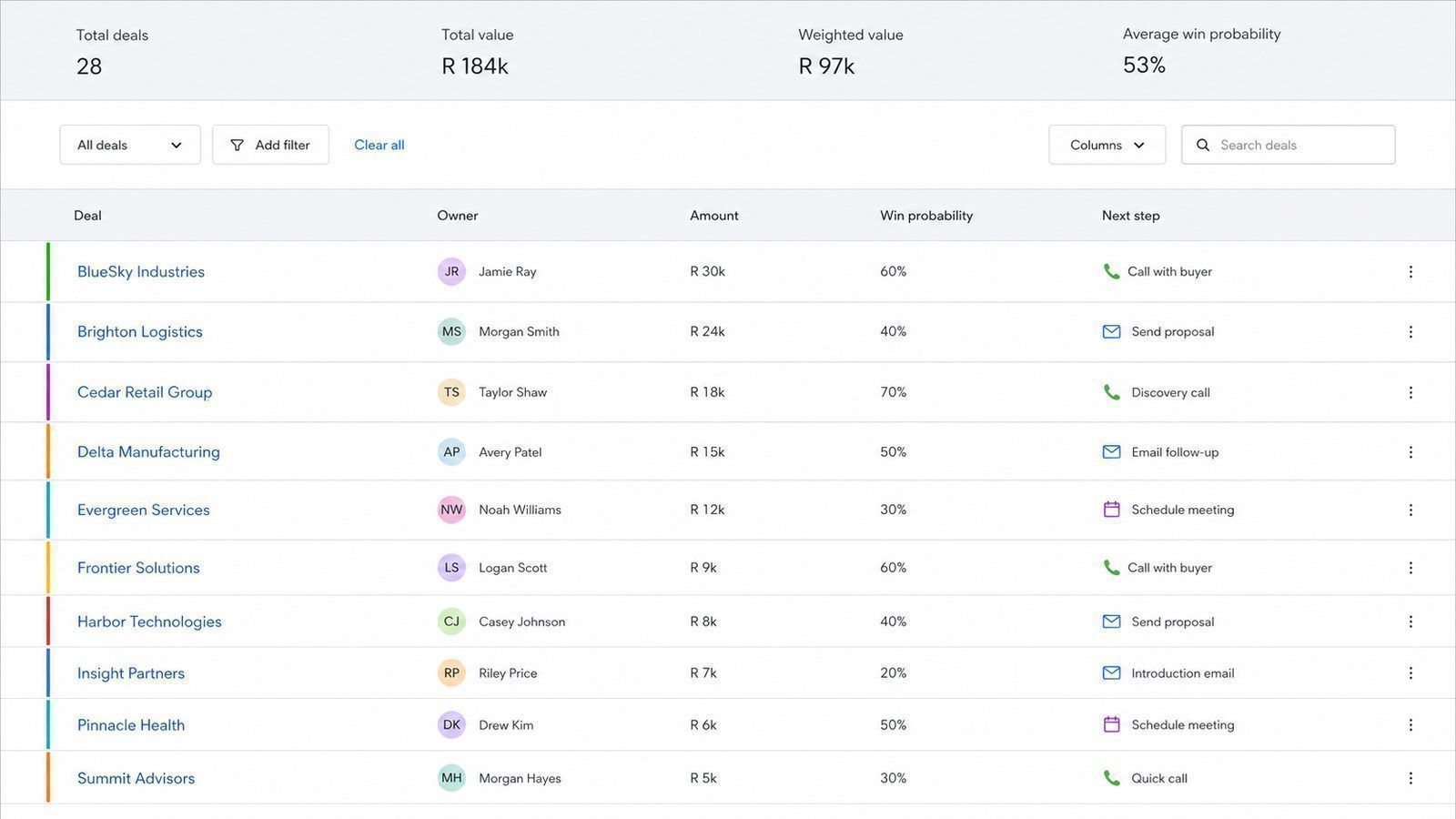
Five Stages Are Enough 🚦
| Stage | What it means | Next action |
|---|---|---|
| New enquiry | They raised a hand | Reply same day |
| Qualified | They can buy, and want to | Book the conversation |
| Quoted | Price is on the table | Follow up in 48 hours |
| Negotiation | Questions, comparisons, timing | Answer, then ask for a decision date |
| Won or lost | Closed, with a reason recorded | Learn from it |
The Three Follow-Up Rules 💬
- Reply to a new enquiry within hours, not days — speed wins more deals than price
- Never send a quote without booking the next contact
- Follow up a lost deal once more after 60 days — circumstances change

The Weekly Fifteen Minutes ⏱️
Every Friday: how many new enquiries, how many quotes still open and their value, what needs a follow-up next week. That is it. Three numbers and a list — the same information a growing business pays a system for, which is exactly why the system works once the habit exists.


Stage Discipline Is a Skill
Pipelines rot in a predictable way. Everything moves to “waiting on client” and never leaves, or deals are moved to “won” before the paperwork exists. Both habits feel harmless and both destroy forecasting. Stage discipline means a stage change requires evidence: a sent quote, a booked meeting, a signed acceptance, a payment.
Enforce it with a one-line question at the weekly review: what changed since last week, and what proves it? Two weeks of that question builds a pipeline you can actually plan cash flow around, which is the entire reason to keep one.
The Reasons Deals Really Die
Across small businesses, the honest causes narrow to five: nobody replied quickly enough, the price was never justified against value, the client was not actually the decision maker, the timing was genuinely wrong, and no one followed up. Only one of those is about price — and even that one is usually about explaining what the money buys.
Record the reason on every closed deal, then read them monthly. Patterns appear fast, and they are usually fixable within a week: a faster reply rule, a clearer quote layout, one more question asked before quoting. A pipeline that records nothing teaches nothing.
From Pipeline to Cash Flow
A pipeline that cannot predict money is a to-do list. Add two fields to make it a forecast: the expected closing date and the realistic probability of each stage. Then, once a week, multiply value by probability across all open deals for the coming month and compare the total with your actual cost base.
The number is always approximate and it is always more useful than nothing. When the forecast lands below your costs, you have weeks of warning to increase enquiry volume or bring a deal forward. Businesses that forecast this way make calmer decisions; businesses that do not usually discover the shortfall in the month it arrives, when their only options are expensive ones.
Five Weekly Reports That Take Minutes
| Report | What it tells you |
|---|---|
| New deals this week | Whether enquiries are still arriving |
| Deals with no activity for 14 days | Where money is quietly leaking |
| Won this month | Whether targets are real |
| Lost and why | The pattern behind the refusals |
| Next month’s forecast | Whether the cash flow works |
Five lists, run every Monday, take about twenty minutes and catch almost every problem while it is still fixable. A pipeline that never produces these lists is a diary of hope.
Training the Team in Twenty Minutes
Show three tasks and one rule. How to add a new enquiry, how to log a note after a call, and how to set the next action with a date. The rule: if it is not in the record, it did not happen. Twenty minutes, once, with the system open on a screen everyone can see.
Then set the example. The owner logging their own calls for the first month is the difference between a working pipeline and a polite suggestion nobody follows. Review one random record each week in the team meeting and ask what is missing — small, public corrections teach faster than a policy document.
Within a month the discipline is a habit, and the pipeline finally tells you the truth about next month’s cash.
| Pipeline health check (five minutes) Every open deal has a next step dated this week. No deal sits in one stage longer than 30 days. Lost deals carry a reason. One owner per deal. A 15-minute pipeline call, weekly, no exceptions. |
Frequently Asked Questions
What is a healthy enquiry-to-sale rate?
It depends on the industry, but the trend matters more than the number: a falling rate with rising enquiries usually means response times slipped.
Should lost reasons be recorded?
Always. Price, timing and silence are the three answers that tell you what to fix.
When do I need software for this?
When more than one person works the same deals, or when the Friday fifteen minutes takes longer than an hour 🎯.
How many deals should one person handle?
Fewer than most teams assume. Twenty-five live deals per person is plenty in a service business; beyond that, follow-ups begin to slip and the pipeline becomes decoration.
Should I chase silent clients?
Yes — once, then again after a month, then two more times over the quarter. Silence is rarely a no; it is usually a busy person who has not decided, and the seller who is present when the decision is made usually wins.
Take the follow-ups out of memory and into a system. See what a custom system includesAsk for a free system consultation |